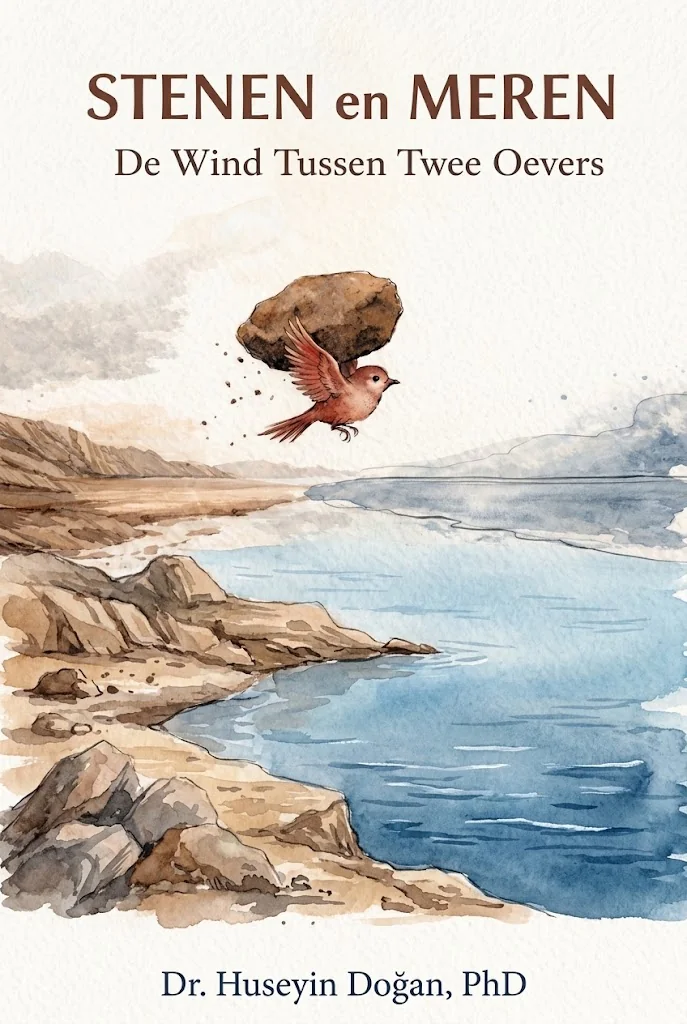
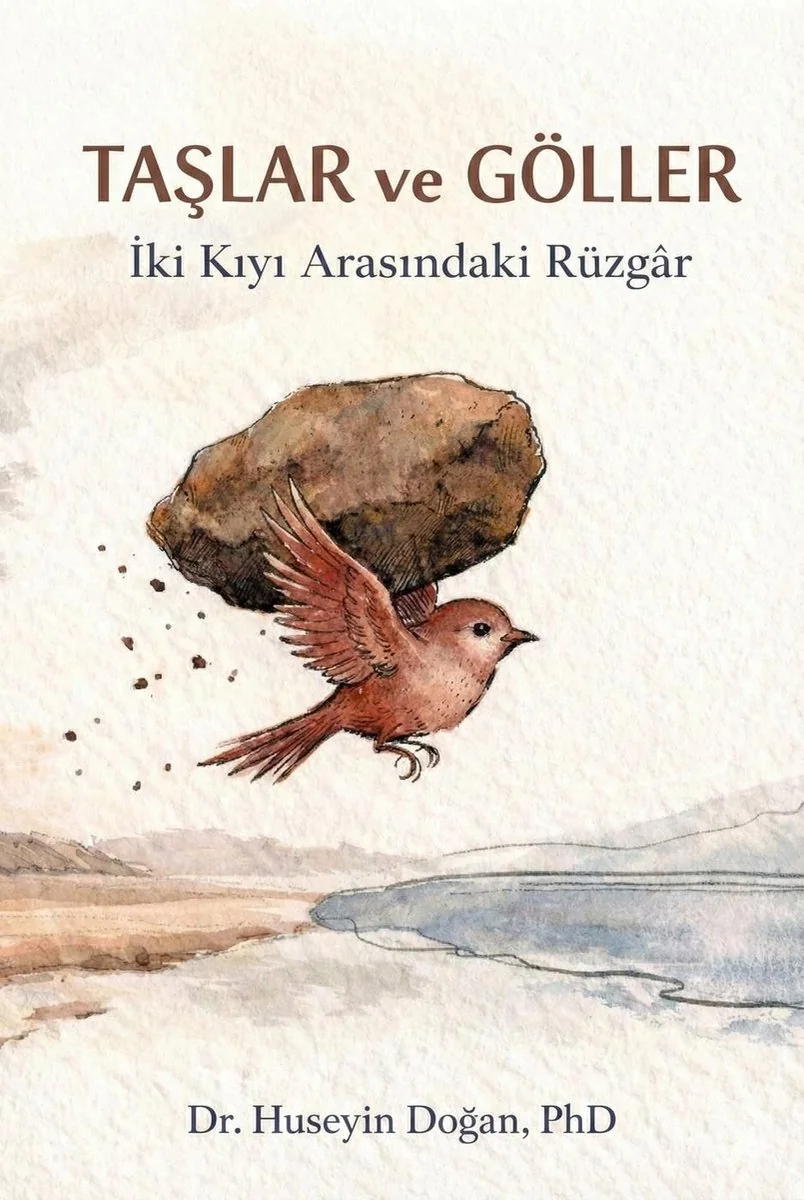
Stenen en Meren / Taşlar ve Göller
The Wind Between Two Shores: a bilingual allegory about belonging, identity and being different.
Some children seem to leave a lake empty-handed. But beneath their chest they carry a stone that no one sees. Leyra is one of them. She tries to carry the water of one lake to another: she learns to make room for herself in a new place without denying the old one, and to walk the thin line between “fitting in” and “staying yourself”.
Leyra grows up among three lakes. In one place she feels “too much”, in another she is called an “obligatory guest”, and in a third she notices for the first time that she may simply be as she is. Everywhere the same is expected of her: shine, don't mix, keep your voice down. Because difference is often admired from afar, but found difficult up close.
“Some books give information. This book sits down beside a child. It watches the lake together. And it waits until the stone falls quiet.”
🪨 What the stone means
Leyra's stone is not shiny, not round, and not easy to explain. That is exactly why it belongs to her. It carries memory, loss, shame, longing and the quiet weight of living between two shores. In this story the stone is neither thrown away nor hidden: it finds its meaning.
🧒 A mirror for the child, a witness for the adult
The metaphors are not only a literary choice; each image has a place in the child's inner world. Through Leyra, the child gently comes closer to their own feelings. The adult reader recognises their own journey in the same scenes, through the story of a bird.
🧠 Written by a psychologist
The book grew out of the emotional patterns a clinical psychologist has seen for years in the therapy room, with clients working through migration, identity and adaptation. The language is kept simple for children; the meaning is deepened with metaphors in which adults, too, recognise their own story.
This is the story of those whose name is spelled wrong, who are told “for now”, who are looking for their place. Written for children who go quiet because they are different, and for the adults raising them.
- For children of migrant and expat families growing up between two cultures and two languages, and their families
- A book to read together: an opening for parents, teachers and therapists to talk about belonging and difference
- Separate Dutch (Stenen en Meren) and Turkish (Taşlar ve Göller) editions: not a literal translation, but written for each language's own reader
- A story that treats difference not as a “problem” but as a meaning one carries, read on two levels
“The book reminds us that we do not have to shine. Sometimes it is enough to keep our place and calmly say: ‘This is me.’”