Home › Articles › What Is the Inner Child and How Do You Heal It?
What Is the Inner Child and How Do You Heal It?
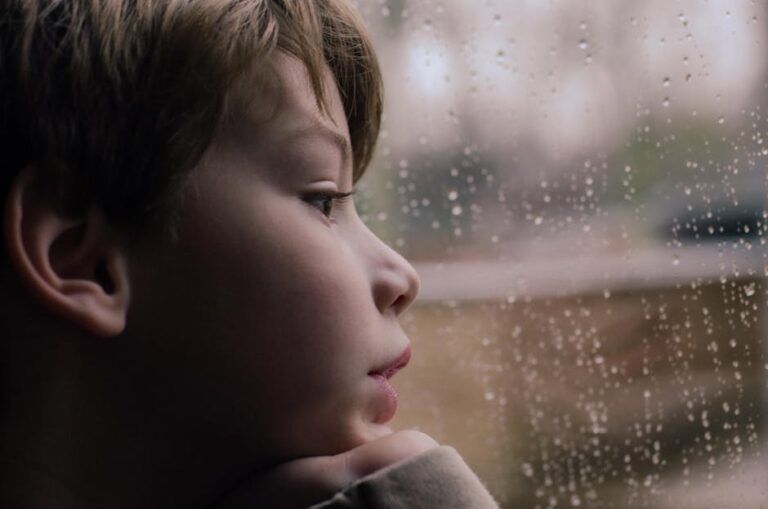
As an adult you have a career, you are financially independent, you make decisions and carry responsibilities. But sometimes, at a moment you least expect, something breaks inside you: someone's small criticism causes disproportionate pain, or for no reason at all a deep loneliness descends upon you.
The answer is surprisingly simple: a child still lives inside you. That child is you: an earlier version of yourself, frozen somewhere in your past, living with unresolved emotions. Sometimes it reminds you of itself through a pain in your body, sometimes through a pattern in your relationships, sometimes through an unexplained sadness. In this article we address the concept of the inner child with its scientific foundations, the four root wounds and the paths to healing, together with observations specific to Turks living in Europe.
What Is the Inner Child? A Scientific Definition
The inner child is a psychological structure that carries our emotional experiences from childhood, memory traces, defense mechanisms and unmet needs. Drawing on Freud's concept of the "id", Jung's "child archetype" and the "Child Ego State" from Eric Berne's transactional analysis, it is today a concept scientifically grounded especially in Internal Family Systems therapy.
This concept is not esoteric or figurative. Over the past 20 years, neuroscience has proven it conclusively: our brain stores emotional memories in a different system from other memories. Bessel van der Kolk's classic 2014 work, The Body Keeps the Score, showed that emotional wounds from childhood are recorded in the limbic system (particularly the amygdala and the hippocampus) and are activated in our adult lives beyond our rational control.
So the inner child is not a metaphor. It truly exists as a neural network in your brain. And when this network is triggered, your 7-year-old nervous system comes into play, not your 40-year-old one.
The Internal Family Systems (IFS) approach, which Richard Schwartz developed in the 1980s and which is widely used around the world today, has firmly grounded this reality in clinical practice. According to IFS, there are three kinds of "parts" within us:
1. Exiles: The wounded, fragile parts of our childhood. They carry shame, fear, loneliness and abandonment. The system buries them as deep as possible so that they are not harmed.
2. Protectors: The parts that cannot bear the pain of the Exiles and develop various strategies to protect them. Perfectionism, controlling behavior, the need to please people, anger, coldness…
3. Self: The compassionate, balanced, wise core self that exists behind all these parts. The aim of inner-child work is to make contact with the inner child from the Self.
A 2024 meta-analysis showed that IFS-based inner-child work improves complex post-traumatic stress disorder by 92% (Frank Anderson et al., Journal of Psychotraumatology), one of the highest success rates in the world of psychotherapy.
What Happened in Your Childhood? Four Root Wounds
In my clinical practice I see that inner-child wounds usually cluster around four basic patterns. Recognizing which pattern is dominant in you is the first step toward healing.
1. The Abandonment Wound
A child's most fundamental biological need is consistent care. When the caregiver (mother, father, minder) is continuously available physically or emotionally, the child develops a secure relationship with the world. But when that care is cut off, is inconsistent or is emotionally unreachable, the child's nervous system experiences an abandonment panic; that panic is a biological threat signal.
This wound appears in adulthood like this:
- Disproportionate panic when a partner does not reply for a while
- In relationships, the constant thought "you are going to leave me"
- The unbearable feeling of being alone
- Excessive attachment, then sudden withdrawal
- Ending relationships yourself (instead of being abandoned)
Among my Turkish female clients in Europe, one form is especially pronounced: growing up separated from their parents during part of their childhood. The parents migrated to Europe for work, the child was left with the grandmother; years later the family was reunited. As an adult, this person constantly experiences the fear of "being left" in relationships, but does not understand it themselves.
2. The Inadequacy Wound
"You are not good enough." This message may not have been said to the child in words; but the child grows up absorbing this message from the expression on the parent's face, from the silence that follows an achievement. Conditional love is its heaviest form: "if your grades are good, I will love you."
How it appears in adulthood:
- Perfectionism and never feeling good enough
- A feeling of emptiness even when one is successful
- The compulsion to please others (people-pleasing)
- The thought "if I show my 'real self', I will not be loved"
- Chronic fatigue (because one must constantly "prove" oneself)
This wound is especially strong in the Turkish family structure, because traditional Turkish parenting tends to show love based on "how good the child is".
3. The Neglect Wound
This is perhaps the most insidious, because it is invisible. Neglect involves no violence; the parent is there, but emotionally absent. The mother may be depressed, the father a workaholic. The child is physically cared for but emotionally invisible: no one asks about their inner world, is curious about it, or notices it.
How it appears in adulthood:
- Difficulty recognizing emotions (aleksitimi)
- Being unable to express needs
- Erasing oneself in order "not to be a bother"
- Being unable to make one's presence felt in relationships
- Deep loneliness even among people
Among first-generation Turks who migrated to Europe, this wound is especially common; migrant families were mostly occupied with the struggle to survive, and attending to their children's emotional world was seen as a "luxury".
4. The Betrayal Wound
This is the heaviest pattern: the wound of children who were harmed emotionally, physically or sexually by someone they trusted. It is a double harm: both the event itself, and the fact that it was inflicted by "the person who should have been safe".
How it appears in adulthood:
- Chronic distrust (no one is trustworthy)
- Constantly testing and controlling in relationships
- Fear of closeness but at the same time an intense desire for it
- Dissociation (the feeling of detaching from oneself)
- Vague physical symptoms (chronic pains, digestive problems)
This wound usually requires professional trauma treatment; it is not resolved with a book or meditation alone.
10 Questions to Get to Know Your Own Inner Child
Do not ask the questions below all in a row in a single day; spread them over time, reflect on each question in one sitting.
- What is your earliest clear childhood memory? What did you feel at that moment?
- Where did you feel safest as a child?
- Whom in your family could you tell your feelings? Were there feelings you could never express?
- What happened at home when you cried? Who reacted to you, and how?
- Were you celebrated when you succeeded? How?
- What happened when you made a mistake? How afraid were you?
- Which emotion was hardest to voice as a child? Anger, sadness or fear?
- If you looked in the mirror now and saw yourself at 7, what would you want to say to that child?
- What would that 7-year-old want to say to the you of now?
- In what area do you still feel "like a child"?
These questions may not be answerable today; the answers may come piece by piece, on different days. Some questions will make you cry, at others you will find yourself surprisingly numb (this can be a sign of dissociation). It is all normal; what matters is having the courage to ask the questions.
The Inner Child Has Been Triggered: How Do I Recognize It?
Your inner child is constantly triggered in real life, but most of the time you are not aware of it. Watch for the following signs:
Physical signs:
- A sudden tightness in the chest
- A sinking feeling in the stomach
- A faint ringing in the ears
- Cold or trembling hands
- A dry mouth
- Being unable to breathe deeply
Emotional signs:
- Disproportionately intense anger or sadness
- A sudden feeling of loneliness
- The eruption of the thought "I am bad"
- A feeling of shame
- Panic
Behavioral signs:
- Suddenly falling silent (freeze response)
- Overeating or not eating
- A shopping spree
- Overworking (escape)
- Calling the partner and saying "nothing"
Most of these reactions are directed not at something happening now, but at something that happened in the past and was never resolved. Important rule: a trigger is usually much larger than the reaction to something happening right now. If you feel "this reaction is excessive relative to what happened", your inner child has most likely become active.
Healing: Making Contact with the Inner Child
Now we come to the practical part. How do you work with the child inside you?
1. Learning to Speak from the Self
In the IFS approach, everything begins with the Self. At a moment of crisis, the connection to the Self is usually severed; it must first be restored. An exercise:
- Sit down, close your eyes
- Breathe out deeply
- Notice your current feeling and reaction
- Ask yourself: "The part giving this reaction is inside me right now, but I am not this part. I am the one who notices this part."
- As the one who notices, turn to that part: "Hello. I see you. Why are you so sad?"
This seems simple, but it is actually a revolutionary inner movement: instead of identifying with one of your parts, you find a larger place from which to observe it.
2. Making Visual Contact with the Inner Child
This exercise feels very emotional to some; do it when you are ready. Take one of your own childhood photos, preferably between ages 5 and 7. Look at the child in the photo; its face, its eyes, its posture.
Ask the following questions:
- What was this child feeling at that moment?
- What did it need?
- Who was caring for it? Who saw its feeling?
- What would you want to say to it?
Now write a letter to that child on paper, from your adult voice, to that child: "Dear little [your name]…". If you do not know what to say, begin with "I see you". You do not have to show this letter to anyone; just write it.
3. The Practice of "Reparenting"
Reparenting is by now an established concept in the psychotherapy literature. The Ideal Parent Figure Protocol (IPF) reduced PTSD symptoms by 60% in a study published in the journal Nature Neuroscience in 2024. The logic is: the form of parenting you needed as a child, you can now give to yourself.
As a daily practice:
- Ask yourself when you get up in the morning: "What does this child need today?"
- When speaking to yourself, speak not in a belittling way, but as a compassionate parent would
- When you make a mistake, say to yourself: "It's okay, we are learning. I am with you."
- At the end of a hard day, imagine that you are embracing yourself
These exercises may seem banal, but neuroscience research shows that they truly recalibrate your nervous system.
4. Somatic Awareness
The inner child lives not in your head but in your body; that is why working only at the level of thought is not enough. At a moment of triggering, instead of stopping to analyze, descend into your body:
- Which bodily sensation am I experiencing right now?
- Where in my body is this feeling? (Chest? Stomach? Throat?)
- Can I describe its shape, its color, its texture?
- Can I breathe toward this feeling?
Locating feelings in the body and breathing toward them opens a channel to the experiences the child lived through without words. Over time, the body releases what it was holding in tension.
5. Doing Again What You Loved as a Child
The last and most enjoyable method. Your inner child also needs fun. What gave you joy in childhood? Drawing, cycling, swimming in the sea, a particular game? Do that now as your adult self; this is not "becoming a child again", but the adult making time for its child. Many of my clients said that this simple exercise brought about one of the most powerful transformations in their lives.
The Inner Child of Turkish Women and Men in Europe
In my 18 years of clinical practice, I see some specific wounds in the inner child of Turks living in Europe in particular:
1. A Childhood Interrupted by Migration
For first-generation or 1.5-generation Turks (who came to Europe in childhood) there is a special wound: the geographical rupture. The child suddenly finds itself in a country it does not know, in a language it cannot speak; it is separated from its mother, grandmother and cousins in Turkey. As an adult, this child often carries the feeling of having "a second self". One layer of inner-child work: making contact again with that left-behind child.
2. The Burden of Being a "Good Migrant"
In your childhood, your parents often said things like: "Be good, child, do not let our name be tarnished." This child could never be "an ordinary child" and lived constantly as the representative of a group. Inner-child work: saying to that child, "you no longer have to carry a flag, you can just be yourself".
3. The Child Caught Between Two Cultures
At home Turkish rules, outside Dutch/German rules; what is "right" at home is "wrong" outside. This child had to switch codes constantly, constantly suppress a part of itself. Inner-child work: helping that child, caught between two cultures, realize that it has the right to carry both identities: not either Turkish or European, but able to be both at once.
4. The Child Who Had to Translate the Emotional Life
A situation I observe very often: children who at a young age had to be their parents' interpreter, at doctor's appointments, school meetings, official matters. This child had to be "an adult" far too early; in its adult life it becomes someone who is overly responsible, wants to solve everyone's problem, and has never been able to reach its own childhood. Inner-child work: helping that child, which took on such great responsibility at a young age, discover that it now has the right to be cared for like a child.
In Closing
That child inside you is still there. It still needs certain things, still wants to say certain things, still waits for you to see it. Perhaps you did not notice, but you have been feeling it all your life: in that sudden feeling of loneliness, in that unexplained anger, in those sudden tears.
That was you. It was always you. You can go to it now; it may have missed you as much as you missed it. And perhaps precisely this moment, in which you are reading this article, is the moment when that child is most "seen": the adult you accepts the existence of the little you within and says to it: "You are no longer alone. I am here. And I see you." This is the moment when transformation begins.
Scientific basis: Anderson, F. G. (2021). Transcending Trauma: Healing Complex PTSD with Internal Family Systems. PESI Publishing. · Brown, D., & Elliott, D. (2016). Attachment Disturbances in Adults. W.W. Norton. · Hickey, A., & Farrell, J. (2024). IFS therapy outcomes in complex trauma: A meta-analysis. Journal of Psychotraumatology, 15(3). · Jung, C. G. (1969). The Archetypes and the Collective Unconscious. Princeton University Press. · Levine, P. A. (2015). Trauma and Memory. North Atlantic Books. · Nader, K., & Hardt, O. (2009). A single standard for memory. Nature Reviews Neuroscience, 10(3). · Schwartz, R. C. (2021). No Bad Parts. Sounds True. · Siegel, D. J. (2020). The Developing Mind (3rd ed.). Guilford Press. · Van der Kolk, B. A. (2014). The Body Keeps the Score. Viking. · Young, J. E., Klosko, J. S., & Weishaar, M. E. (2003). Schema Therapy: A Practitioner's Guide. Guilford Press. This article does not replace medical advice.
Frequently asked questions
Doesn't inner-child work feel childish to me?
At first, yes, it may feel strange. But this approach rests on a very solid scientific foundation. You will find that this practice, which feels "silly" to you, changes your life after 3 to 6 months.
Should I talk to my parents now?
Not necessary. Healing the wounds does not require an external confrontation. Inner work is enough. If a healthy dialogue is not possible now, you can heal even without ever talking.
Were my parents bad people?
Most of the time, no. Most parents do the best they can with the resources they have. Inner-child work is not "blame"; it is "recognition" and "healing".
Can I do it myself or do I need a therapist?
For mild wounds, a book, journaling, meditation and creative expression may be enough. But wounds of complex trauma, neglect and betrayal usually require professional support. Above all, do not work alone if there is dissociation, panic or chronic depression.
How long does it take?
Inner-child work is not a "one-time" task; it lasts a lifetime. But meaningful transformation is usually seen within 6 to 12 months. The first small aha moments can come within a few weeks.
I do not want to raise my children with the same wounds, what should I do?
When you heal your own inner child, your children's childhood changes automatically. As you heal, the parenting you give them transforms too. The best parenting is not an "ideal technique"; it is the parent who has made peace with themselves.
Clinical boundaries and emergencies
This article is intended solely for general psycho-education and does not replace a diagnosis or personal treatment advice. In case of an acute crisis, risk of self-harm or a threat to safety, contact 112, your general practitioner (huisarts) or the out-of-hours GP service (huisartsenpost) in the Netherlands. For a conversation, the helpline 113 Zelfmoordpreventie (0800-0113) is available day and night.
Related services
If you would like support
If the themes in this article noticeably affect your life, you can request an appointment for online Turkish-language therapy or review the frequently asked questions.